Speech Sound Disorders
Speech Sound Disorder is an umbrella term used to describe difficulties with perceiving, producing, or using speech sounds correctly, and they can affect how clearly a child, teen, or adult is understood in everyday communication. These challenges may include articulation errors (how sounds are physically produced) and phonological errors (patterns of sound use that affect how speech is understood).
Speech-language pathologists are trained to assess and treat speech sound disorders for both children and adults. Therapy focuses on improving speech clarity, sound production and strengthening oral motor coordination to improve communication clarity.

3 Types of Speech Sound Disorders
These challenges can affect how clearly someone is understood, but with the right support, individuals of all ages can build clearer speech, stronger communication skills, and greater confidence.
Articulation Disorders:
Articulation errors stem from a breakdown in the movement of oral articulators such as the tongue, teeth, jaw, lips, etc. which can lead to difficulty pronouncing specific sounds correctly. Therapy typically focuses on accurate placement of oral structures and articulators paired with sound and production awareness. Examples may include a lisp, sound distortions such as with /r/, or sound omissions such as “ca” for “cat”.
Motor Speech Disorders
Motor speech sound disorders encompass difficulties in producing speech sounds due to problems with the motor planning, programming, or execution of speech movements, and can include conditions like apraxia and dysarthria. These children are typically highly unintelligible, may have been late to begin talking and present with inconsistent errors.
Apraxia of speech: Speech impairments stemming from problems with the planning and programming of the motor movements. The brain sends a message to the articulators (e.g. tongue, lips, voice box), but the message gets scrambled along the way, resulting in difficulty performing voluntary speech movements. Characteristics of apraxia include:
- Inconsistent error patterns
- Groping of articulators (i.e. looks like “trying to get your mouth around a movement”)
- Distortion of vowels and consonants
-
Dysarthria: Speech impairments stemming from problems with the execution of the motor movements required for speech. This occurs when there has been damage to the nervous system in the areas that control for speech. The result of this damage may cause paralysis, atrophy, spasticity, etc. or may impact the ability for the muscle to move (e.g. weakness, lack of coordination) which prohibits them from properly executing the movements for speech. Children may have acquired or developmental dysarthria, though developmental dysarthria is more common. Characteristics of dysarthria will vary depending on the areas of the brain or nervous system affected; however, here are some signs to look for:
- Running out of breath while speaking
- Slurred or staccato speech
- Monotone voice
- Voice that is too high, too low, too loud, or too quiet
- Hoarse, nasal, strained or breathy voice
- Difficulty moving the lips or tongue
- Trouble swallowing
- Rapid or uneven speech rhythm
Phonological Disorders
Phonological errors stem from difficulties understanding and organizing the sound system of language in contrast to the physical production of speech sounds. This often results in consistent error patterns that can impact an individual’s communication. Therapy typically focuses on helping individuals raise awareness towards recognizing and learning sound patterns. Examples may include replacing sounds such as using /k/ consistently for /d/ (“dey” for “key” or omitting a sound such as saying “pider” for “spider”.

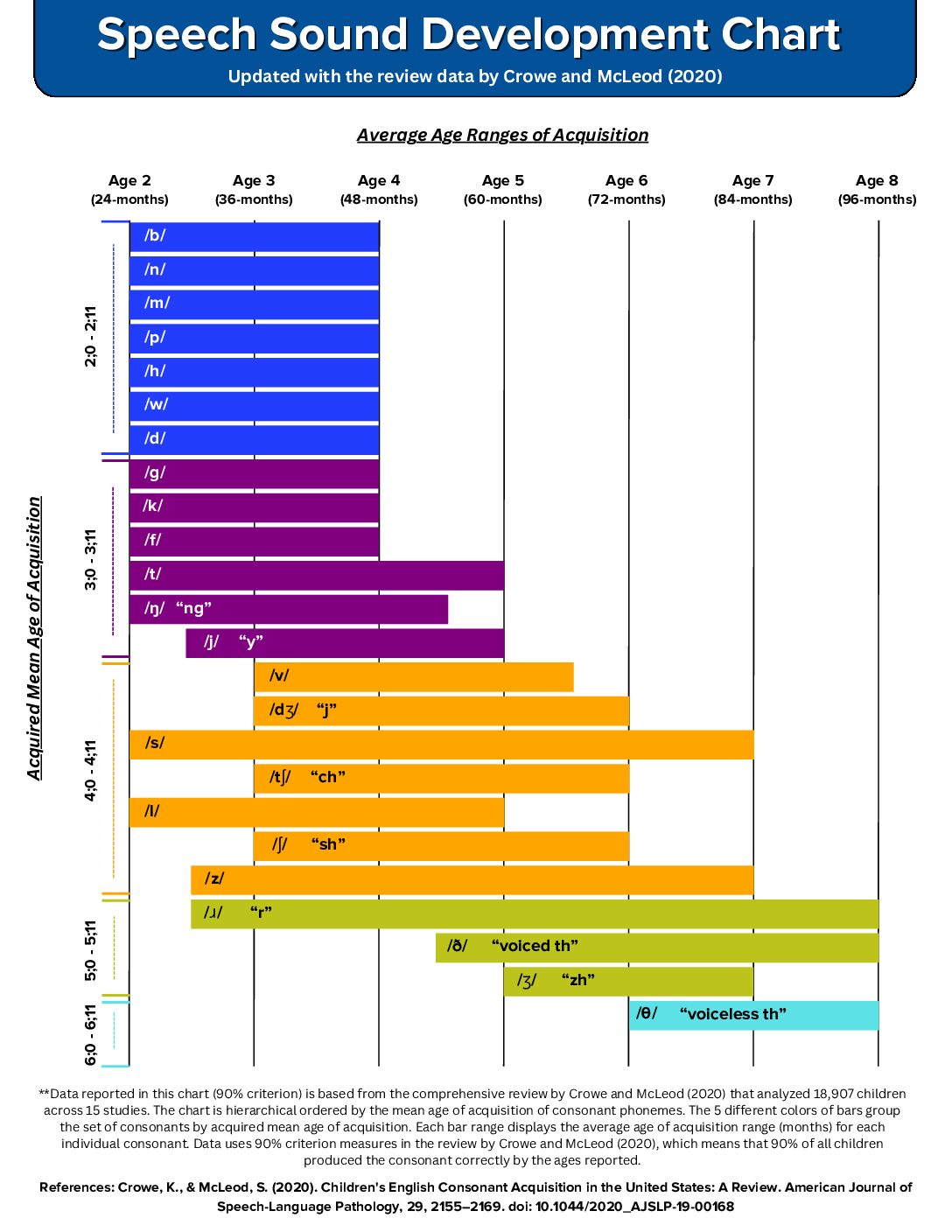
In Children – If your child is having consistent or inconsistent difficulties producing sounds beyond the expected age as highlighted in the speech sound development chart below, we are here to help. We offer speech therapy for children of all ages focusing on improving sound production, clarity, educating and building confidence in communication. Early intervention can make a significant difference, and our team is here to support every step of the way!
French Services!
Lear Communication is pleased to be offering speech sound assessment and treatment in French! Our French-language services support children and adults with articulation, phonological, and speech sound disorders. Assessment and therapy are with a bilingual Speech-Language Pathologist and use standardized assessment materials in the preferred language. Sessions are tailored to each individual’s communication needs, helping clients build clear, confident speech in the language that matters most to them.

In Adults – Speech therapy can be beneficial for individuals across the lifespan into adulthood. Speech sound disorders can stem from neurological conditions, traumatic brain injuries, strokes or life-long articulation challenges.
We work with adults to improve speech clarity through targeted exercises, muscle strengthening, and strategies for effective communication. Whether the issue is longstanding or newly developed, speech therapy can help adults speak more clearly and confidently in daily interactions.
Accent Expansion Services
Lear Communication also provides elective accent expansion services for people who use English as a second language and wish to add different speech sounds, intonation patterns, and word-stress patterns to their communication repertoire.
Accent expansion is not treatment for a speech disorder. Services are intended to support a client’s personal or professional communication goals while respecting their linguistic and cultural identity.
In-person and virtual appointments are available for clients located in Ontario.
Research: Speech Sound Development
This chart represents updated research by Crowe and McLeod (2020).
Earliest acquired speech sounds can be seen at the top of the chart, with later developing sounds at the bottom. In this study, 90% of all children acquired these different sounds by the ages reported. The vertical axis reflects average age of acquisition, while the horizontal axis reflects an age range of acquisition.
We’re here to help! Contact us for more information or to schedule an assessment and treatment.