Adult Services
We help adults enhance their communication, speech, and swallowing abilities affected by conditions such as stroke, brain injury, Parkinson’s disease, voice disorders, and other communication disorders through personalized speech therapy services. Our services begin with a comprehensive assessment and focus on practical goals to support and lead to more confident communication in daily life.
Our experienced speech therapists provide therapy for adults tailored to individual communication needs and communication goals, including acquired brain injury rehabilitation, stroke-related aphasia and dysarthria, stuttering and cluttering, speech sound disorders, voice therapy, swallowing treatment, accent expansion, and Augmentative and Alternative Communication (AAC) support. Through targeted therapy, we aim to equip individuals to communicate more effectively in conversations, social situations, and professional settings while supporting participation, independence, and quality of life.
Acquired Brain Injury
Our clinicians provide adult speech therapy to support communication after brain injury or stroke, such as:
- Direct Impact blow to the head (e.g., hockey cross-check, fall)
- Sudden Deceleration (e.g., rapid stop car accident)
- Rapid Spinning Motion (e.g., high-speed car accident)
Our cognitive communication therapy includes supports for memory, attention, problem solving, and broader communication skills.

Speech Sound Disorders
Our customized therapy approach emphasizes practical strategies that help adults improve speech clarity by refining the motor skills needed for accurate sound production.

Stuttering/Cluttering
Adult speech therapy addresses speech challenges that affect speech flow and everyday communication, including dysfluencies such as repetitions, hesitations, or prolonged sounds. Our speech therapy services include therapy for adults tailored to articulation, voice, and fluency needs. Our customized therapy approach may include speech practice, pacing, and other fluency or communication strategies to support clearer speech and more confident communication. Regular practice may help adults apply communication strategies in daily conversations and professional settings.

Stroke – Aphasia & Dysarthria
Aphasia impairs language skills, making it difficult to understand or express words, while dysarthria affects the muscles needed for speech, resulting in unclear or distorted sounds. Although both disorders impact communication, they differ in their causes and require different treatment approaches.

Swallowing
Speech-language therapy can support people with swallowing difficulties through assessment and targeted treatment. Therapy programs are tailored to individual swallowing needs and goals and may help support the safety and efficiency of eating and drinking.

Voice Therapy
Voice therapy is an evidence-based service provided by a Speech-Language Pathologist that focuses on improving vocal function, efficiency, and comfort. It can be used for vocal rehabilitation, prevention of further strain or injury, reducing tension, or to support individuals in developing a voice that aligns with their identity, including gender affirming voice care.

AAC Services
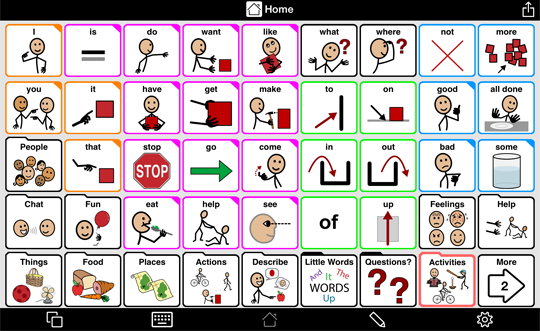
Augmentative & Alternative Communication (AAC) is any form of communication other than speech, that may be used to assist, add on to (augment), or be used as an alternative to speech to ensure communication success. AAC tools can also be used to support clarifying messages, repairing communication breakdowns, and act as clearer auditory and written models of intended speech to support expansion of speech and literacy skills.
We’re here to help! Contact us for more information or to schedule an assessment and treatment.