
Swallowing - Dysphagia
What is Dysphagia?
Dysphagia (dis-FAY-juh) is the medical term for difficulty swallowing. People with dysphagia may have trouble swallowing food, drinks, saliva, or medications safely and comfortably. Swallowing difficulties can occur anywhere along the swallowing pathway, from the mouth to the stomach.
For some people, swallowing difficulties can increase the risk of food or liquid entering the airway instead of the esophagus (the tube that carries food to the stomach). This is called aspiration and can increase the risk of chest infections, including aspiration pneumonia. Ongoing swallowing difficulties can also lead to weight loss or dehydration and should prompt medical care.

Difficulty swallowing is usually a symptom of an underlying medical condition rather than a condition on its own. Some common causes include:
| Stroke | Parkinson’s Disease | Head and Neck Cancer |
| Traumatic Brain Injury (TBI) | Huntington’s Disease | Structural changes or swelling in mouth/throat |
| Cerebral Palsy | Amyotrophic Lateral Sclerosis (ALS) | Dry mouth (xerostomia) |
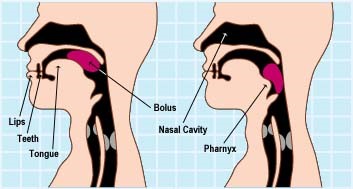
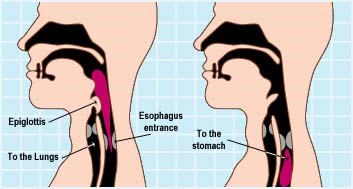
How Swallowing Works
Swallowing is something most of us do without thinking, but it is actually a complex process involving the mouth, throat, and esophagus. More than 30 muscles and several nerves work together to move food and liquids safely from the mouth to the stomach while protecting the airway.
Oral Phase: Food or drink is chewed and mixed with saliva to form a soft ball called a ‘bolus’. Your tongue then moves the bolus to the back of your mouth to begin the swallow.
Pharyngeal Phase: As you swallow, your body automatically protects your airway. Your airway closes, and the bolus is directed into the esophagus (the tube that carries food to your stomach) rather than the lungs.
Esophageal Phase: The esophagus uses coordinated muscle contractions to move the bolus down into the stomach.
Swallowing problems can occur during any stage of this process, making it difficult or unsafe to eat and drink.
Signs of Difficulty Swallowing
If you experience any of the following, a swallowing assessment and/or treatment may be beneficial:
- Drooling or food/liquid spilling from the mouth
- Slower, more hesitant, or effortful eating
- Coughing or choking after swallowing
- Feeling of food “getting stuck” in mouth or throat
- Regurgitation after eating
- Fatiguing quickly while eating
- Avoiding foods of certain consistencies
- Frequent chest infections
How We Can Help
Speech-Language Pathologists are trained to assess swallowing and identify the safest and most effective way for you to eat and drink.
Depending on your individual needs, treatment may include:
- A comprehensive swallowing assessment
- Exercises to improve the strength and coordination of the muscles used for swallowing
- Strategies to make eating and drinking safer and more comfortable
- Recommendations for changes to food textures or liquid thickness, when appropriate
- Education and training for family members and caregivers
- Referrals for instrumental assessments such as a Videofluoroscopic Swallow Study (VFSS/Modified Barium Swallow Study), when more detailed information is needed
- Find out more about our outpatient Wentworth-Halton Swallowing clinic in Hamilton
Our goal is to help you eat and drink as safely, comfortably, and confidently as possible while maintaining your nutrition, hydration, and quality of life.
We’re here to help! Contact us for more information or to schedule an assessment and treatment.