Autism Services
At Lear we provide Neurodiversity Affirming services for Autistic clients of all ages, in all areas of communication development. Our Speech-Language Pathologists and Communicative Disorders Assistants can provide individualized, evidence-based supports for communication needs with or without an autism diagnosis.
Our Neurodiversity Affirming, Evidence-Based Autism Services are:
- Individualized: Supporting the unique needs of each autistic client and their families. We prioritize rapport and connection with our clients and their families to best understand how we can support them as unique individuals who are valuable participants in family, school, and cultural communities.
- Strengths-based: Building from what an individual can do as opposed to focusing solely on what they can’t do. We presume competence and potential of each client, giving them appropriate supports to stretch their strengths.
- Meaningful, Relevant, and Intrinsically Motivated: Ensuring engagement and regulation and purposeful goals that support the client in skills development for their interests and priority needs. Promoting communication opportunities based on relationships and connection instead of complying to communication partner demands.
- Honouring Authentic Play: “All play is okay” and welcome in our therapy sessions as long as it is safe for everyone. We join clients in their authentic play and support them in building communication there first, expanding activities as their interests and comfort grow.
- Supporting and accommodating sensory experiences: Prioritizing a sense of felt safety by building trust, connection, regulation and engagement within a supportive sensory environment. Ensuring a child is within their optimal learning zone. Promoting self-advocacy for sensory needs to meet clients where they are each individual session for maximal learning.
- Building Autonomy: Supporting clients in being able to say what they want to say, when they want to say it, to whoever they want to say it to, in the modality that works best for them in that moment. Building the skills to be able to say “no” and explain their choices about their daily lives.
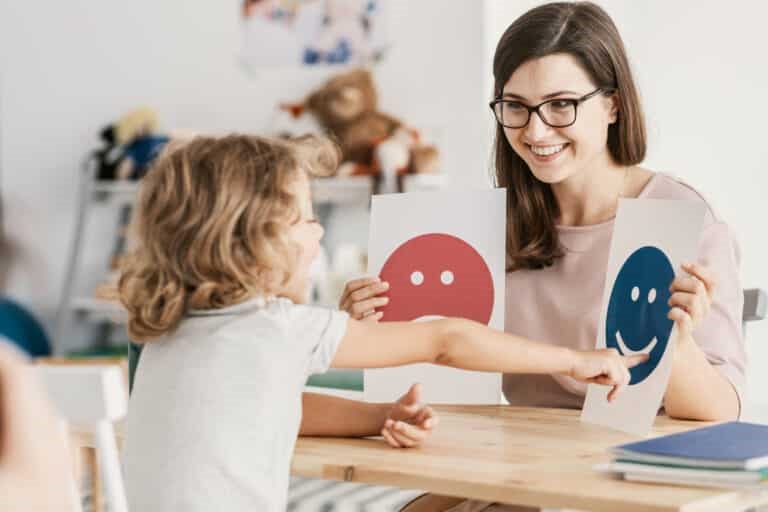
- Using Total Communication Approach: Building and honouring a toolbox of communication modalities and methods for clients to use as feels appropriate to them including use of: pictures, low-tech language boards, gestures, sign language, facial expressions, scripts, single-word utterances, creative self-generated speech, AAC, and more.
- Honouring Echolalia as Communication: Supporting children who use echolalia, scripts, and gestalt language processing styles, as all or part of their communication strategies, by supporting the use and expansion of their scripts, helping caregivers understand their possible meanings, and supporting the client in clarifying their meaning as needed.
- Building Social Communication Education: Supporting clients in identifying both their own and others’ communication style preferences, and how different responses and interactions may be interpreted by others in order to maximize being understood by, and understanding others, as they intend.
- Collaborative: Supporting and learning alongside client’s school teams, Occupational Therapists, ABA therapists and more!
Common Goals:
| Developing a Total Communication Environment using no-tech, low-tech, and high-tech AAC alongside speech | Self-advocacy for autonomy, sensory needs, regulation supports, and communication style preferences |
Supporting comprehension and receptive language |
| Supporting executive functioning | Increasing the number of communication functions that are clearly understood by others | Increasing competence and comfort with AAC tools |
| Expressive Language | Vocabulary Development | Support with echolalia and scripting |
| Recognizing and repairing communication breakdowns | Inferencing and problem-solving | Understanding social communication norms, the double empathy problem |
| Literacy: reading accuracy, reading comprehension, written expression | *Communication partner coaching embedded in session and separate as desired by family |

Ontario Autism Program Core Clinical Services (OAP)
Speech-Language Pathology Services are Core Clinical Services with the Ontario Autism Program. Eligible SLP services include:
- Speech-Language Pathology Assessments
- Speech-Language Pathology Therapy Sessions
- Communicative Disorders Assistant Therapy Sessions under appropriate supervision
- Collaboration with team members
- Support of purchase for AAC Devices following assessment
- Support for purchases of assistive technology tools related to SLP therapy goals
- Programming AAC devices
- Caregiver and Communication Partner Coaching
Children receive services and supports until the age of 18. To find out more or to register your child, visit the Autism Ontario website.
We’re here to help! Contact us for more information or to schedule an assessment and treatment.