Reminders
April 3: Good Friday – CLOSED
April 6: Easter Monday – OPEN
March Days
St. Patrick’s Day
March 17, 2026
From coast to coast, Canadians celebrate March 17th with parades, Irish music, Irish dancing, lots of green and community spirit. Share with us how you celebrate!
Daylight Savings
March 8, 2026
Spring Forward! Don’t forget to change your clocks one hour ahead, as we prepare for a warm and bright springtime!
March is Developmental Disabilities Awareness Month
Music Therapy Awareness Month
Did you know that the brain processes music and language in separate locations? That’s why we can use music to support and elicit language in those with communication disorders and differences. Music Therapists (MTA) may work collaboratively with SLPs and OTs.
Here are just a few examples of how SLPs use music to support communication and cognition:
- Stroke & Dementia – Music stimulates the language centers of the brain and holds memories.
- Autism – Songs are often a source for scripts and a tool for routines and regulation.
- Early Language – Using simple and repetitive songs that allow for expectant pauses can elicit language from preschoolers.
-
Voice – Breath support, pitch, volume, and prosody.
- Stuttering – Singing can increase fluency of speech and reduce tension.
World Hearing Day
March 3, 2026
World Hearing Day, held every March 3rd by the World Health Organization, highlights the importance of protecting children’s hearing. About 90 million children live with hearing loss, yet more than 60% of childhood cases can be prevented through simple public‑health measures. Early identification and care help protect learning, development, and future opportunities. Adding routine hearing screening and early‑intervention programs to school and child‑health services can greatly improve outcomes for children with ear or hearing concerns.
International Women's Day
March 8, 2026
International Women’s Day celebrates the progress made in advancing women’s rights, as well as the achievements and contributions of women around the world, including the field of speech-language pathology. As a women-lead and women-staffed business, Lear Communication recognizes leadership, compassion, and commitment to empowering voices of all ages.
“International Women’s Day reminds us that meaningful change takes time, commitment and action. Everyone has a role to play.” (canada.ca)
Neurodiversity Celebration Week
March 16 – 20, 2026
This week, and always, let’s celebrate the unique skills, talents, and perspectives of neurodivergent individuals. Let’s strive to:
- Challenge the misconceptions about neurological differences,
- Change negative perceptions,
- Cater to individual support needs,
- Create inclusive and equitable cultures within education, employment, and organizations.
At Lear Communication, we strive to empower neurodivergent populations, whether they be clients, staff, or parents. We aim to foster an environment where individuals can be their authentic selves!
5 Ways to Be Neurodiversity Affirming:
- Presume Competence & Potential – Assuming someone cannot do something limits any opportunity for them to demonstrate that they can. However, it can also be harmful to assume that an individual needs no support just because they can do other activities independently. Offer support but allow for independence!
- Honour All Forms of Communication – All modalities of communication are valid and should be acknowledged. This includes verbal speech, gestures, written messages, drawings, sign language, eye contact, and facial expressions.
- Co-regulation & Communication Expectations – A child must be regulated and engaged before we can expect language and higher level cognitive skills. All communication should be natural and not forced upon the individual.
- Acceptance – Accept and embrace communication differences, perspectives, and unique interests. All kinds of play is okay, as long as it is safe.
- Respect Autonomy – Teach advocacy and honour it too. “NO” means “NO”, no matter how it’s communicated!
World Down Syndrome Day
March 21, 2026
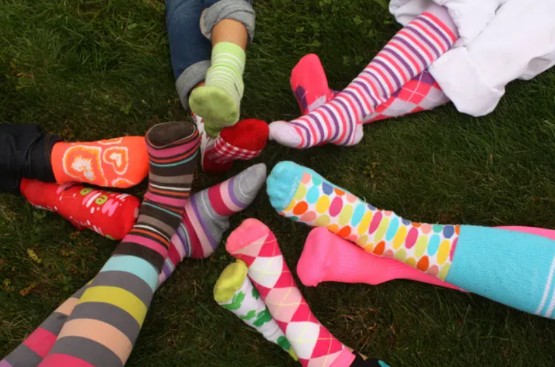
March 21st is World Down Syndrome Day — a day to celebrate the abilities, achievements, and unique voices of people with Down syndrome. At our clinic, we’re passionate about supporting communication in ways that build confidence, connection, and self-expression. Join us in Rock Your Socks on March 21st by wearing bright or mismatched socks to spark conversations about inclusion and the power of every voice.
Indigenous Languages Day
March 31, 2026
We can decolonize our minds by learning the meaning and knowledge held in Indigenous languages. English, with its focus on nouns and fixed categories, encourages a certain way of seeing. But Indigenous languages open up a different path—one rooted in verbs, movement, relationships, and unfolding layers of meaning. As we learn these languages, our thoughts can expand with new ways of perceiving pictures, stories, and concepts. It becomes not just an act of language learning, but a process of reconnecting with deeper ways of knowing that have always existed. Your involvement—whether through learning a few words, supporting local programs, or amplifying Indigenous voices—truly makes a difference towards Truth and Reconciliation.